
Most in-home detoxes go the way they are meant to. Symptoms peak, they are managed, and the person comes through it at home with their family nearby. That is the whole point of the model, and for carefully screened people it works.
But part of doing this safely is being honest that it does not suit everyone, and that occasionally a detox which started appropriately at home stops being the right setting partway through. Knowing what that looks like — before it becomes an emergency — is one of the most useful things a family can carry into the process.
Here is what our nurses watch for, what triggers a change of plan, and why escalating is a sign the system is working rather than a sign of failure. If you are weighing whether home is the right setting at all, call us at 866-896-3741 before anything starts.
Why escalation is built into the plan, not an exception to it
A good detox plan is not a prediction. It is a set of thresholds agreed in advance, with a decision already made about what happens if any of them are crossed.
That matters because withdrawal is not linear. Someone can look settled at noon and be markedly worse by midnight. If nobody has decided in advance what “worse” justifies, that decision gets made at 3am by a frightened family with no clinical training. Deciding it beforehand, in daylight, with a physician involved, is a completely different situation.
So when we talk about escalation, we are not describing a plan going wrong. We are describing the part of the plan that exists precisely because withdrawal is unpredictable.
The vital sign patterns that change the plan
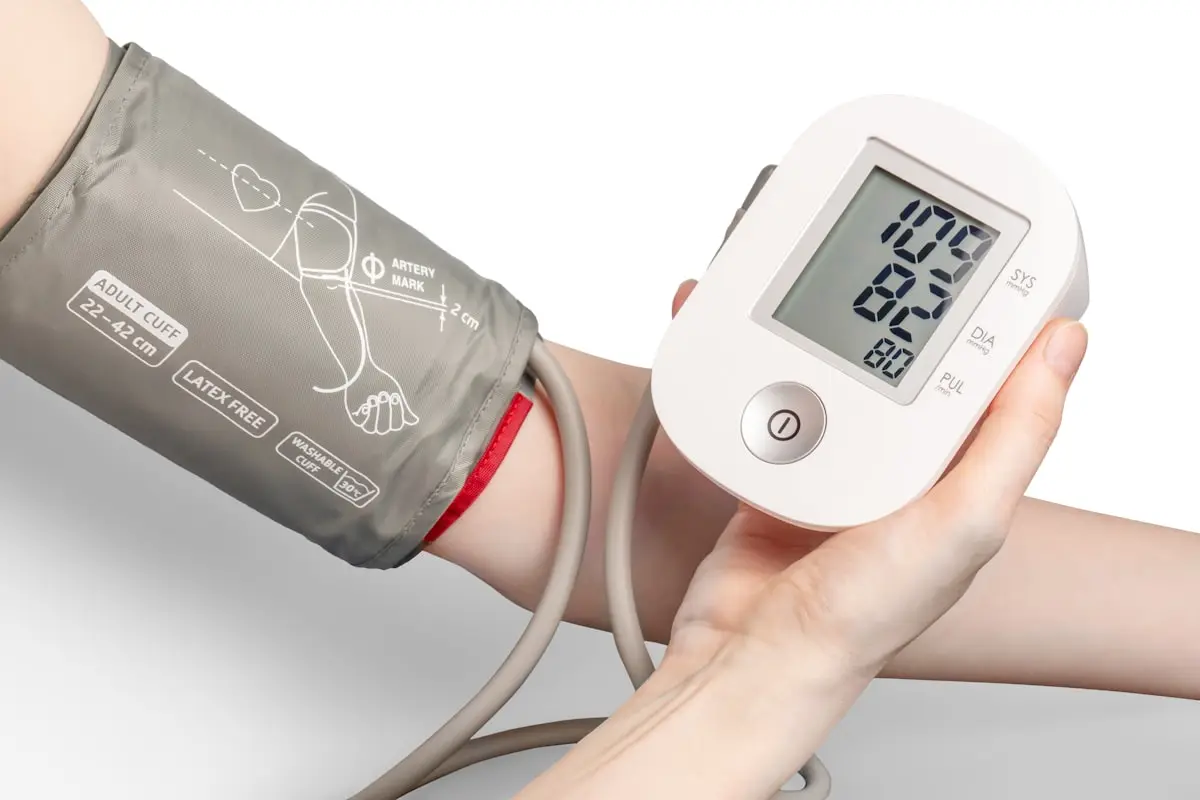
Nurses monitor vitals on a schedule rather than by impression, because the trend matters more than any single reading. What prompts a call to the supervising physician is usually a direction of travel: blood pressure and heart rate climbing across successive checks rather than settling, a temperature that keeps rising, oxygen saturation drifting down.
A single elevated reading in early alcohol withdrawal is expected and is not alarming on its own. The same reading, higher again two hours later, with the person more agitated than before, is a different conversation entirely.
This is also why home detox is not the same as detoxing alone. The monitoring is the intervention. You can read more about how we structure that on our in-home alcohol detox page.
Neurological signs that end the home phase
Some findings are not thresholds to watch — they are the answer. A seizure, or any suspicion of one, means emergency services, not a phone call to the office. So does profound confusion, not recognising familiar people or surroundings, or seeing or hearing things that are not there.
These are the signs associated with severe alcohol withdrawal and its most dangerous presentations, and they are why SAMHSA and ASAM both treat withdrawal management as requiring clinical assessment rather than self-management.
To be as plain as possible: alcohol and benzodiazepine withdrawal can be fatal. Neither should ever be attempted alone, and neither should be ridden out at home on the assumption that it will pass. If someone is having a seizure, is severely confused, or cannot be roused, call 911.
Things other than symptoms that change the answer
Not every escalation is clinical. A plan can also stop being viable for practical reasons, and it is better to say so than to push on.
The support person may be unable to continue — exhausted, called away, or simply more frightened than they expected to be. Someone may be unable to keep fluids down, which changes the medical picture quickly. Or the household may turn out to be less controlled than it seemed at assessment, with alcohol still accessible or people coming and going.
None of these are moral failures. They are conditions that were true at assessment and are not true now, and the honest response is to change the setting rather than hope. Where the difficulty is coordination rather than clinical need, our private care management service exists to sort exactly that.
What escalating actually involves
Families often imagine escalation means an ambulance and a scene. Usually it does not.
Most often it means a change in the medical plan: the physician adjusts, monitoring frequency increases, and a nurse stays longer than scheduled. The next step up is a transfer to an inpatient setting arranged in an orderly way, with clinical records going with the person rather than being reconstructed on arrival.
Only the acute neurological events described above call for emergency services. The great majority of adjustments happen quietly and never come close to that.
What families should agree before day one
Ask these before the detox begins, not during it:
- Who do I call at 2am, and does a person answer?
- Which specific findings mean call 911 rather than call you?
- How often are vitals checked, and what is the threshold for changing the plan?
- If a transfer is needed, who arranges it and who goes with them?
- What happens if the support person cannot continue?
A programme that answers these clearly and specifically has thought about failure. One that answers vaguely has not, and that is worth knowing before you commit.
Where to start
The decision about whether home is the right setting belongs at assessment, before anyone commits to a plan. A thorough screening is what makes escalation rare, and it is also what makes it orderly when it happens.
Call 866-896-3741 to talk it through, or see whether we cover your area on our coverage page. If someone is in immediate danger right now, call 911. If the crisis is psychiatric, call or text 988.
What a thorough screening rules out before day one
The reason escalation is uncommon is that most of the risk is removed at assessment rather than managed later. A proper screening is not a formality, and it is the part worth asking about when you are comparing providers.
It should cover how much and how long, because duration of daily use predicts withdrawal severity more reliably than quantity alone. It should ask directly about previous withdrawals, since a prior seizure or episode of delirium changes the risk profile substantially and makes home management inappropriate for many people. It should establish what else is being used, because combinations behave differently from any single substance.
It should also take a real medical history — cardiac conditions, liver disease, diabetes, pregnancy and psychiatric history all shift the calculation — and it should confirm that a capable adult will actually be present. A plan that depends on a support person who works nights is not a plan.
If an assessment does not ask these things, that is informative in itself. The screening is where safety is decided; everything after it is execution.
This article is for general educational purposes and is not medical advice. It does not describe medication or dosing, and it is not a substitute for assessment by a qualified clinician. Alcohol and benzodiazepine withdrawal carry seizure and mortality risk and must never be attempted without medical supervision.
